You finally secured your Wikipedia page. The Knowledge Panel is live. Investors see a pristine, verified digital footprint. It feels like a permanent victory.
Then, you wake up to a Google Alert. Someone edited your page overnight. A competitor, a disgruntled ex-employee, or an anonymous troll just rewrote your company history and injected a minor, long-forgotten controversy directly into your introduction.
Welcome to the open-source arena. Securing your page is only step one. Protecting it is the real war.
Defending Your Digital Territory
The moment your page is published, it becomes a target. Here is how you protect your brand from digital vandalism without triggering a platform-wide backlash.

Wikipedia pages require active, round-the-clock monitoring to detect and respond to malicious edits.
1. Identify and Contain the "Edit War"
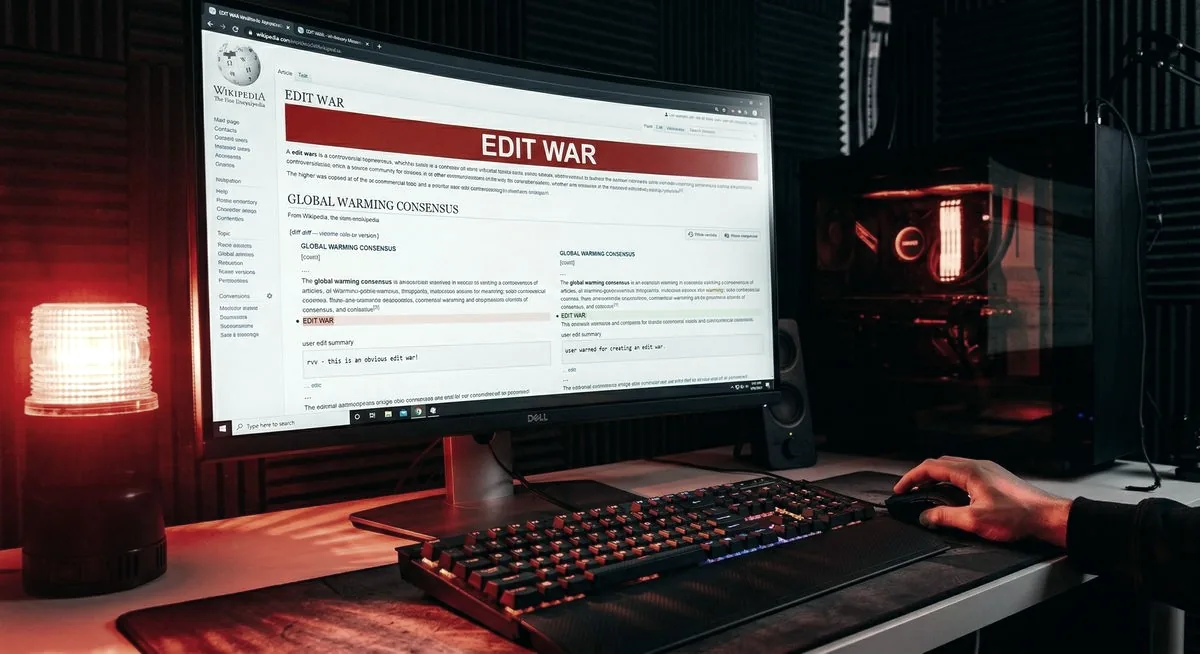
An attack rarely stops at a single edit. A failure of the system can lead to an edit war, in which two or more parties dig in and refuse to compromise, instead reverting each other's changes outright. If your staff spots a negative change and immediately deletes it, the vandal will simply revert it back. This aggressive back-and-forth alerts senior administrators, bringing massive, unwanted scrutiny to your entire article.
2. The NPOV Defense Strategy
You cannot just erase negative press because you dislike it. Wikipedia demands a strict neutral point of view:
"A neutral point of view attempts to present ideas and facts in such a fashion that both supporters and opponents can agree."
If a controversy is heavily documented in independent media, it stays on the page. Your defense strategy is not deletion, it is balance. You must ensure the negative claims are contextualized with objective facts and proportional weight, preventing the page from devolving into an attack piece.
3. Establish Continuous Monitoring
Wikipedia does not send you a push notification when your legacy is altered. You need active, round-the-clock monitoring:
- Immediate detection, the faster you detect malicious edits, the faster a compliant editor can revert them
- Community guideline citations, reverts must cite specific Wikipedia policies to stick
- Proportional response, overreacting draws more attention than the original vandalism
- Page protection requests, administrators can lock pages facing persistent vandalism
Why You Cannot Fight Back Directly
This is the hardest pill for a successful founder to swallow. When you see a lie on your own Wikipedia page, your immediate instinct is to log in and delete it. Do not touch that keyboard.

Directly editing your own Wikipedia page, even to correct vandalism, triggers conflict of interest flags.
You have a direct conflict of interest. If you or your marketing team jump into an edit war, Wikipedia editors will immediately spot the corporate IP address or the promotional tone. The consequences are devastating:
- Your protective edits will be reversed immediately
- Your account will be blocked from further editing
- Your page could be flagged with a visible warning banner stating the subject is manipulating the article
- That banner becomes the first thing investors, journalists, and clients see when they Google your name
Professional Wikipedia Crisis Management
Managing a Wikipedia crisis requires a deep understanding of community policy. You need a third-party expert who can petition administrators, request page protection locks, and argue your case using Wikipedia's own internal rulebook.
At Auto Draft, we provide 24/7 Wikipedia monitoring and crisis management to protect your most valuable digital asset. Stop leaving your digital reputation unguarded.
Request a free vulnerability assessment on your current search results and establish a monitoring protocol for your brand.